“content introduction” search results (2000)

Introduction to the aroma of three different kinds of coffee bitter acid and mellow taste
Aroma is not only the life of coffee quality, but also the best expression of coffee production process and roasting technology. The climate, variety, treatment method, storage and baking technology of the place of production are all conditions that determine the aroma of coffee beans. Generally speaking, fat, protein and sugars are important sources of aroma, while lipids blend with the sour and bitter of coffee to form a smooth taste. therefore
2015-10-20 Three kinds different coffee flavor introduction picric acid strong flavor quality
Boutique coffee Panamanian coffee features Panamanian coffee introduction coffee beans
Panamanian coffee editor this entry lack of business card map, add relevant content to make the entry more complete, but also can be quickly upgraded, hurry up to edit it! The microclimate of the Panamanian highlands is the most important resource that makes Panamanian coffee unique. The most important resource that makes Panamanian coffee unique is its microclimate. The environment of the Republic of Panama from east to west allows cold air
2016-05-20 Boutique coffee Panama features introduction coffee beans editor
Introduction to Renas Manor of El Salvador Coffee Bean Manor with Water washing and Solar treatment
Coffee species: 100% Arabica coffee beans, treatment: washing and sunbathing coffee varieties: Bourbon particle size distribution: moisture content 10.48 plus or minus 0.5% (5 repeats) raw bean proportion 1.15 plus or minus 0.15g/CM3 judge: Mr. Xu Guozhi, evaluation roaster: Mr. Zhang Bocheng judgment: Mr. Guo Weiping, Mr. Zhang Wenwei, Mr. Zhang Bocheng, Mr. Zhang Jinyuan. Auction editor
2016-07-20 Adopted washed tanned treated El Salvador coffee beans manor Linus Nass
Introduction of Arabica coffee VS Robusta coffee
Arabica species VS Robusta species as a crop, tree species and planting environment are the basic factors for the good ring of coffee beans. At present, the coffee beans in circulation in the coffee market are Arabica (Coffea Arabica) or Robusta (Coffea Robusta). Generally speaking, Arabica coffee trees have fragile vitality and low resistance to diseases and insect pests.
2015-05-07 Introduction boutique coffee rabbi card seed Robbs booth Rob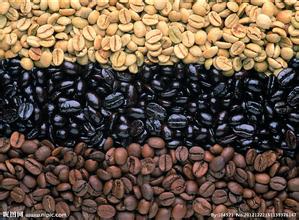
Introduction to the origin and characteristics of Ethiopian coffee, Yega Xuefei
The coffee producing areas of Ethiopia are Sidamo, Harald and Sidamo, Harrar and Yirgacheffe. Sidamo and Harrar are provinces and divisions. Sidamo is located in the south of Ethiopia bordering Kenya, and Harrar borders Somalia in the east of Ethiopia. Although Yirgacheffe is a community in the Sidamo region, due to soil composition and water content and other reasons.
2016-06-03 Ethiopia Coffee Origin characteristics introduction Yega Sheffield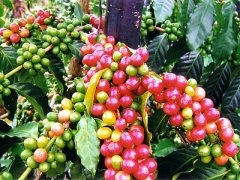
Introduction to boutique coffee beans-- the characteristics of Hawaiian Kona Fine Coffee
Hawaii, a beautiful tropical Pacific island, not only produces beautiful scenery, but also produces the famous Kona coffee. Kona is also named after origin. Only coffee beans grown and strictly certified on the southwest coast of Hawaii's main island, 20 miles long and 2 miles wide, 150m ~ 750m above sea level, covering the slopes of Hualalai and Mauna Loa volcanoes, can be crowned with Kon.
2016-03-23 Boutique coffee beans introduction Hawaii Kona coffee features beauty
Introduction to Arabica species, the main species of coffee trees
The first is Arabica beans, which account for 70% of the world's output. The world-famous Blue Mountain Coffee and Mocha Coffee are almost all Arabica. The other is the Robasta species, which is native to the Congo in Africa and accounts for about 20% to 30% of the world's output. Different varieties of coffee beans have different tastes, but even the same varieties of coffee trees
2016-06-06 Coffee main type rabbi card introduction one kadou output
Introduction to the species and types of coffee trees in Liberia
The main types of coffee trees: the first species of Arabica is Arabica beans, which account for 70% of the world's output. The world-famous Blue Mountain Coffee and Mocha Coffee are almost all Arabica species. The other is the Robasta species, which is native to the Congo in Africa and accounts for about 20% to 30% of the world's output. Different varieties of coffee beans have different flavors.
2016-10-17 Liberia coffee type characteristics introduction main la
Introduction to the types of coffee trees the ingredients of coffee machine detergent
Coffee (Xoffea arabica Linn) Coffee is a perennial evergreen shrub or small tree of Rubiaceae. It is a horticultural perennial cash crop with the characteristics of fast growth, high yield, high value and wide market. Wild coffee trees can grow to a height of 5 to 10 meters, but coffee trees planted on the manor are often cut to a height of less than 2 meters in order to increase the amount of fruit and facilitate harvesting.
2016-06-08 Coffee type introduction
An introduction to the flavor of Jamaican Blue Mountain Coffee with a very strong aroma and a lasting fruit flavor.
The flavor is very full-bodied, with long-lasting fruit flavor. The particles are fuller. The content of caffeine in medium-roasted Blue Mountain coffee is very low, which is less than half of that of other coffee, which is in line with the modern concept of health. The same coffee tree species, whether planted in Hawaii, Kenya, Papua New Guinea or anywhere else with a similar climate, cannot produce blue mountain coffee.
2016-06-22 Aroma very full-bodied persistent fruity Jamaica Blue Mountain coffee flavor introduction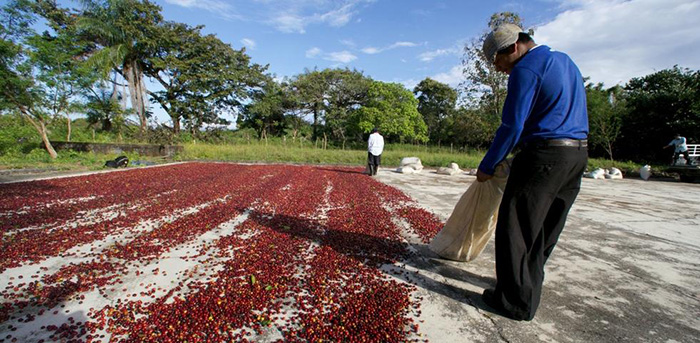
The treatment of raw coffee beans: a detailed introduction to the sunburn method
The solarization process can also be called a natural process, which is basically the oldest, simplest, and requires the least mechanical tools. The first step is to sort and clean it up first. Immature, overripe, damaged coffee fruits will be singled out first. At the same time, the branches, leaves, mud and stones mixed in the fruit will also be removed. Sieves are usually used to deal with this preliminary
2015-12-01 Coffee raw beans treatment method solarization details introduction insolation process also available
Common types of coffee beans introduce the design content of Chinese cafes
[Colombia] Colombia chooses the higher altitude area of Medellin, the quality of coffee beans is neat, which can be called the standard beans of coffee beans. The coffee from Medellin is large in shape, light green and has a special thick flavor. It is widely favored for its rich and unique aroma. The taste is sweet in the acid, with mellow acidity and bitterness, which is the most accepted single product coffee by the general public. (original
2016-06-08 Common Coffee beans species introduction China Cafe Design content Colombia
A brief introduction to the processing process of Coffee beans
There are three main methods for processing coffee: dry, semi-dry and non-dry. The purpose of processing is to peel the coffee beans, reduce the water content of the coffee beans to a level suitable for preservation, and then deal with the coffee beans according to the market demand. Recently, the harvest of coffee has been fully spread out in Yunnan. I think it's time to pick out some of the blog posts I've posted. this
2014-10-18 Coffee knowledge boutique coffee science coffee processing
Introduction to the apparatus for the proportion of water and powder
Preparation of cup measuring instruments: 1) 8 porcelain cups or glasses of equal volume: theoretically, the content of the cup accumulates between 5 and 7 ounces. The Rocks-style glasses perform quite well. 2) kettle: or hot kettle. The minimum capacity of the kettle should be 64 ounces. 3) Bean grinder: the coarse scale grinder has an obvious advantage here because it keeps different coffees in the same way.
2016-10-18 Coffee cup steps related content proportion apparatus introduction cup test preparation
Puerto Rican Coffee Flavor and taste introduction to boutique coffee beans in manor area
Light baking-when the beans make the first light sound, the volume expands at the same time, and the color changes to a delicious cinnamon color. Acidity dominates the flavor of shallow roasted beans, texture and taste have not been brought into full play, generally used as canned coffee. Medium roasted-coffee beans show an elegant brown color. This method of baking is also called city roast. Medium roasting can preserve the original flavor of coffee beans and release them moderately.
2016-08-09 Puerto Rico coffee flavor taste manor producing area characteristics boutique coffee beans
An introduction to the morphological characteristics of coffee trees
Coffee tree is a shrub or small tree of Rubiaceae; leaves opposite, leathery, long ovate; every March, the branches will appear white flowers, petals spirally arranged, the heart of flowers jump around the petals, take a closer look, really like a small windmill playing in childhood, emitting bursts of jasmine fragrance; the fruit is oval, berries, crimson, containing two seeds, that is, we are familiar with coffee
2016-06-07 Coffee morphological characteristics introduction
An introduction to the morphological characteristics of coffee trees
Coffee tree is a shrub or small tree of Rubiaceae; leaves opposite, leathery, long ovate; every March, the branches will appear white flowers, petals spirally arranged, the heart of flowers jump around the petals, take a closer look, really like a small windmill playing in childhood, emitting bursts of jasmine fragrance; the fruit is oval, berries, crimson, containing two seeds, that is, we are familiar with coffee
2016-06-13 Coffee morphological characteristics introduction
Introduction of Guatemalan coffee beans washed with spring water
Perfect coffee cherries and beautiful seeds. Use spring water to wash and separate the coffee. At the beginning of the fermentation project, we actually feel that we attach great importance to the quality of coffee production. The combination of excellent soil and professional technology creates the most advanced coffee. Delicious, of course! After leaving Huitz Matig Manor, the next destination is Antigua, the last stop.
2016-06-28 Use spring water coffee cleaning Guatemala coffee beans introduction beauty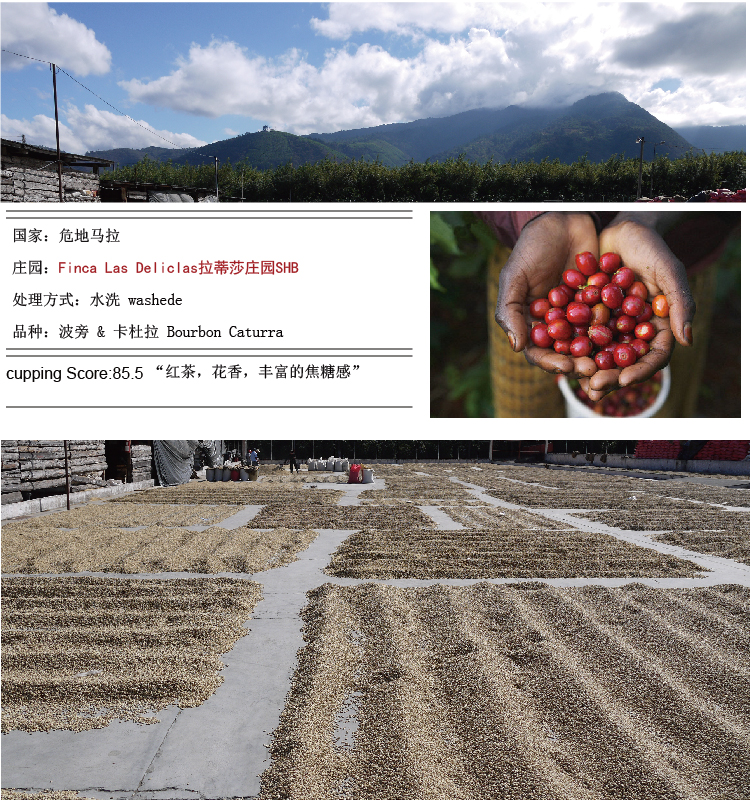
Please introduce the raw bean treatment method of coffee washing, semi-washing, sun drying and honey treatment.
The first is dry treatment (secado), also known as natural all-day exposure (natural). After the coffee fruit is actually picked, it is dried directly in the sun. According to the weather conditions, it is generally necessary to dry the coffee beans for 2 weeks to reduce the water content of the coffee beans to 10%, 12%, and then use a machine to remove the dried peel and pulp. The raw bean processing plant (beneficio) usually keeps the outside of the coffee beans when the raw beans are stored.
2016-04-14 Introduction Coffee Water washing Solar treatment Raw beans one secado
Fresh coffee raw beans introduce varieties of coffee beans classification of coffee beans what are fresh coffee beans
From the fruit state of coffee beans when they are picked from the tree to the state of raw beans that can be baked, the moisture content of coffee beans will be controlled between 9% and 13%, and it is not easy to bake if the water content is too high or too low. Generally, we get newly collected raw beans with water washing treatment, the moisture content is usually about 11.5% to 12.5%, half-washed Mantenin may reach 13%, and half-washed Brazil is 11% ~ 12% per day.
2016-03-28 Fresh coffee raw beans introductions coffee beans varieties classification what trees